Categories

This guide details a dynamic offensive system‚ emphasizing player movement‚ penetration‚ and quick decision-making for scoring opportunities.
The Dribble Drive Motion Offense is a potent basketball strategy built upon continuous player movement‚ aggressive drives to the basket‚ and rapid ball circulation. It’s designed to exploit defensive weaknesses by forcing help rotations and creating open scoring chances. Unlike static offenses‚ this system thrives on reads and reactions‚ empowering players to make intelligent decisions based on defensive positioning.
This approach isn’t merely about individual penetration; it’s about creating a cascading effect of opportunities. Successful drives draw defenders‚ opening passing lanes for kick-outs to shooters or dump-offs to post players. The constant motion keeps the defense off balance‚ preventing them from establishing a solid set. This offense is adaptable‚ suitable for various skill levels‚ and emphasizes teamwork.
Several foundational principles underpin the effectiveness of the Dribble Drive Motion Offense. First‚ penetration is paramount – consistently attacking the basket forces defensive collapse. Second‚ spacing is crucial; players must maintain optimal distances to facilitate passing and driving lanes. Third‚ player movement‚ without the ball‚ is vital for creating opportunities and disrupting defensive schemes.
Decision-making‚ based on defensive reactions‚ is another key element. Players must quickly read the defense and react accordingly – pass‚ shoot‚ or continue the drive. Finally‚ ball movement should be crisp and purposeful‚ shifting the defense and finding the open man. These principles‚ when executed cohesively‚ create a dynamic and challenging offensive system.

Effective player movement and spacing are cornerstones of this offense. Players should constantly be cutting‚ screening‚ and relocating to create passing angles and driving lanes. Spacing isn’t static; it dynamically adjusts based on the ball’s location and defensive positioning. Maintaining a “two-pass” maximum is ideal‚ ensuring quick ball rotation.
V-cuts and L-cuts are essential for creating separation and opportunities. Players must fill vacated spaces immediately after a teammate’s drive or pass. Proper spacing prevents defensive congestion and allows for easier penetration. Continuous motion keeps the defense engaged and prevents them from settling into a comfortable position‚ maximizing offensive efficiency.

The core of this offense revolves around aggressive‚ decisive penetration. Players must attack the basket with the intent to score or draw help defense. Successful penetration creates opportunities for kick-out passes to open shooters on the perimeter. These passes should be crisp‚ accurate‚ and delivered with proper timing.
Reading the defense is crucial; players must identify where the help is coming from and make the appropriate pass. Swing passes are vital for shifting the defense and finding the open man. Emphasize quick decision-making – a hesitation can disrupt the flow. Prioritize making the simple‚ correct play‚ leading to high-percentage shots.
This offense isn’t about rigid plays‚ but intelligent responses to defensive pressure. Players must constantly read the defense – help-side positioning‚ over-rotation‚ and closeouts. Based on these reads‚ they react accordingly‚ choosing between driving‚ passing‚ or shooting.
Decision-making speed is paramount. Hesitation kills momentum. Players should develop a “see it‚ read it‚ react” mentality. Teach them to recognize advantageous mismatches and exploit defensive weaknesses. Encourage players to make quick‚ confident choices‚ fostering a proactive‚ rather than reactive‚ offensive approach; This empowers adaptability.
Success hinges on clearly defined roles within the dribble drive motion offense. While fluidity is key‚ each player has core responsibilities. Point Guards initiate offense and dictate tempo. Wings must be adept at both driving and shooting‚ spacing the floor effectively.
Post players need strong passing skills and the ability to finish inside or kick out to open shooters. Every player must be a willing passer and cutter. Defensive rebounding is a team responsibility‚ crucial for transitioning to offense. Understanding and executing these roles consistently maximizes offensive efficiency.
The Point Guard is the engine of the dribble drive motion offense‚ responsible for initiating the attack and controlling the tempo. Exceptional ball-handling skills and court vision are paramount. They must effectively penetrate the defense‚ drawing help and creating opportunities for teammates.
Decision-making is critical – knowing when to score‚ pass‚ or continue the dribble. A high assist-to-turnover ratio is a key indicator of success. They also direct spacing‚ ensuring proper floor balance. The Point Guard must be a vocal leader‚ communicating effectively with all players.
Wing players are crucial scoring threats and spacing creators within the dribble drive motion offense. Their primary responsibility is to be ready to shoot when receiving kick-out passes from penetrating teammates. Consistent three-point shooting is highly valued‚ stretching the defense.
They must also be adept at cutting to the basket when the defense collapses‚ exploiting open lanes. Strong off-ball movement and understanding of spacing principles are essential. Defensive rebounding and transition defense are also key components of their role‚ ensuring a balanced attack.
Post players in a dribble drive motion offense aren’t solely traditional post-up threats; their role is evolving. They must become skilled passers and screeners‚ facilitating the offense from the high and low post. Quick decision-making on short passes to cutters or perimeter shooters is vital.
Effective screening for driving guards creates scoring opportunities. Offensive rebounding remains important‚ but positioning to clear space for drivers is equally crucial. Footwork and agility are needed to seal defenders and establish passing angles‚ contributing to overall offensive flow.
A strong foundation in dribbling is paramount for success in the dribble drive motion offense. Players must master both hand dribbling‚ maintaining control while penetrating the defense. Low‚ controlled dribbles protect the ball and allow for quick changes of direction. Developing a consistent crossover and between-the-legs dribble are essential.
Emphasis should be placed on dribbling with the head up‚ allowing players to read the defense and make appropriate passes. Practicing dribbling at game speed builds confidence and improves reaction time. Ball security is non-negotiable; minimizing turnovers is key to offensive efficiency.

The attack dribble is the engine of the dribble drive motion offense‚ initiating penetration and disrupting the defense. Players should utilize a variety of moves – long strides‚ quick crossovers‚ and hesitation dribbles – to create separation. Focus on driving with purpose‚ aiming for specific gaps in the defense‚ not just random penetration.
A key technique is the “rip” move‚ a sudden‚ forceful change of direction. Protecting the ball with the off-arm is crucial against aggressive defenders. Maintaining a low center of gravity enhances control and explosiveness. Practice finishing at the rim after attacking dribbles‚ utilizing both layups and floaters.
Mastering changes of pace and direction is paramount for beating defenders in the dribble drive motion offense. Sudden bursts of speed followed by controlled slowdowns keep defenders off balance. Utilize hesitation moves and stop-and-go dribbles to create space. Sharp changes of direction‚ like crossovers and behind-the-back dribbles‚ are essential for penetration.

Players must practice varying their rhythm‚ avoiding predictable patterns. A quick first step combined with a change of pace can create immediate separation. Selling the move with eyes and head fakes enhances deception. Footwork drills focusing on agility and quickness are vital for developing this skill.
Maintaining ball security during penetration is crucial in the dribble drive motion offense. Keep the ball low and shield it with your body‚ utilizing both arms. Avoid carrying the ball or palming‚ which can result in turnovers. Strong dribbling with fingertips provides better control. Be aware of help defenders and anticipate potential traps.
Practice dribbling with your head up to survey the court and make quick decisions. Use your off-arm to ward off defenders and create space. Change your dribble height and speed to disrupt timing. Develop a strong core for balance and stability while absorbing contact.
Effective passing is the lifeblood of the dribble drive motion offense‚ requiring quick reads and accurate deliveries. Prioritize passing to open teammates after penetration collapses the defense. Utilize skip passes to quickly move the ball across the court. Sharp‚ crisp passes are essential for efficient ball movement.
Simultaneous cuts should accompany dribble penetration‚ creating passing lanes and scoring opportunities. Cutters must read the defender and react accordingly – backdoor cuts‚ flash to the basket‚ or spacing the floor. Timing is critical; cuts should be made with purpose and anticipation.
Identifying passing lanes is paramount; players must constantly scan the defense for openings created by penetration and player movement. Anticipate where teammates will be before they arrive‚ leading them with passes. Utilize one and two-handed passes‚ adapting to the defensive pressure and distance.
Timing is everything. Passes should arrive at the receiver’s peak cutting momentum‚ allowing for a quick catch and immediate scoring opportunity. Avoid telegraphing passes; disguise intentions to prevent interceptions. Practice passing on the move to enhance accuracy and speed.
Backdoor cuts exploit overaggressive defenders‚ creating easy scoring opportunities near the basket. Players must read the defender’s positioning and time their cuts accordingly‚ aiming for a quick‚ decisive move to the rim. Flare screens‚ set for perimeter players‚ create separation for jump shots or drives.
Effective timing is crucial for both. The screener must make solid contact‚ while the cutter needs to read the screen and utilize it effectively. Communication between players is vital to ensure proper execution. Practice these actions repeatedly to build chemistry and timing.
Anticipating defensive adjustments is key to a successful dribble drive offense. Teams will often overhelp‚ leading to open shots or driving lanes. Players must read these reactions and make quick decisions – passing to the open man‚ continuing the drive‚ or pulling up for a jump shot.
Countering pressure requires disciplined ball movement and spacing. Utilize skip passes to quickly shift the defense‚ and employ quick cuts to exploit gaps. Recognizing traps and double-teams is vital; players must be prepared to pass out of them decisively.
Successfully navigating traps and double teams is crucial for maintaining offensive flow. Players must develop a two-hand pass mentality‚ delivering quick‚ accurate passes to open teammates before the trap fully develops. Strong ball-handling and a low center of gravity are essential for splitting the trap if passing isn’t immediately available.
Pre-reading defensive tendencies helps anticipate traps. Players should identify potential trapping zones and communicate effectively with teammates. Footwork and pivoting are vital for creating passing angles and avoiding turnovers. Practice drills focusing on quick decision-making under pressure are paramount.
Adaptability is key when facing varied defenses. Against man-to-man‚ continue emphasizing penetration and kick-outs‚ exploiting individual matchups. Against zone defenses‚ quick ball movement and finding gaps in the zone become paramount. Utilize skip passes and attack seams effectively.

Recognizing defensive adjustments – like sagging help or aggressive denials – requires constant observation. Players must be prepared to adjust spacing and timing accordingly. Implementing counters‚ such as quick hitters or post feeds‚ can exploit defensive overreactions. Pre-scouting opponents and identifying their defensive tendencies is invaluable.
Consistent practice is crucial for mastering the dribble drive motion offense. Begin with individual skill work‚ focusing on penetration moves and finishing at the rim. Progress to partner drills emphasizing passing accuracy and timing on kick-outs.
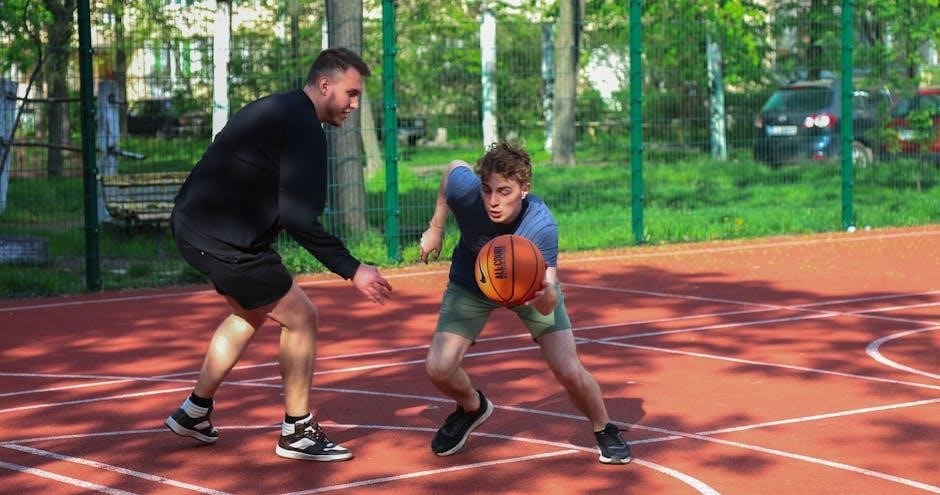
Small-sided games (3-on-2‚ 2-on-1) build decision-making skills in transition. Continuous motion drills reinforce spacing and cutting principles. Full-court drills simulate game speed and fatigue. Repetition and feedback are vital for developing muscle memory and understanding offensive concepts. Regularly assess player progress and adjust drills accordingly.
These drills isolate offensive players‚ forcing them to utilize dribble moves to beat a defender and drive to the basket. Start with basic straight-line drives‚ emphasizing protecting the ball and finishing strong. Progress to incorporating crossovers‚ spin moves‚ and hesitation dribbles.
Add a “kick-out” component‚ requiring players to make a pass to an open teammate after drawing the defense. Focus on reading the defender’s reaction and making appropriate decisions. Vary the starting point and defensive pressure to simulate game situations. Emphasize explosive first steps and controlled finishes.
These drills simulate fast-break opportunities‚ crucial for a dribble drive motion offense. Begin with 3-on-2 scenarios‚ focusing on quick outlet passes and filling lanes. Emphasize spacing and making the extra pass to create an open shot or driving lane. Progress to 2-on-1 situations‚ demanding decisive decision-making from the ball-handler.
Players should practice reading the defense and exploiting mismatches. Stress the importance of sprinting the floor and making strong‚ accurate passes. Incorporate finishing drills at the rim‚ including layups and pull-up jump shots. Focus on quick transitions from defense to offense.
These drills reinforce the constant movement and passing essential to the dribble drive motion offense. Start with a simple five-player passing circle‚ emphasizing crisp‚ accurate passes and quick cuts. Introduce a second ball to increase the pace and challenge players’ awareness. Progress to passing lanes with players continuously moving after each pass.
Focus on passing to lead teammates into open spaces. Incorporate skip passes to quickly change the point of attack. Stress the importance of handoffs and quick reversals. Encourage players to read the defense and make appropriate passing decisions. Maintain a high tempo throughout the drill.
Expanding beyond the core principles‚ teams can integrate pick-and-roll actions to exploit defensive mismatches. Utilizing staggered screens creates confusion and opens driving lanes. Employing secondary breaks off initial penetration keeps the defense constantly reacting. Introducing quick hitters – pre-set plays – provides scoring options against set defenses.

Varying entry points to the offense prevents predictability. Implementing option plays based on defensive reads adds complexity. Utilizing post-split action creates high-percentage scoring opportunities. Focus on reading overhelp and making the appropriate pass. Adaptability is key; adjust based on opponent tendencies.

Integrating pick-and-roll actions enhances the dribble drive’s effectiveness‚ creating multiple scoring threats. Screen angles are crucial; tight angles force help defense‚ opening driving lanes. The screener’s roll timing must be precise‚ creating a passing window. Reading the defender’s coverage – show‚ hedge‚ or switch – dictates the ball handler’s decision.
Slip screens can catch aggressive defenders off guard. Pick-and-pop options stretch the floor‚ creating space for penetration. Utilizing ghost screens adds deception. Emphasize quick decision-making; pass to the rolling screener or attack the open lane. Proper spacing is vital to avoid clogging the paint.
Exploiting transition moments is paramount in a dribble drive system. Push the pace after rebounds or turnovers‚ seeking quick scoring before the defense sets. Early penetration can disrupt defensive organization. Spacing the floor immediately allows driving lanes to open. Look for quick passes to cutters or shooters;
Secondary break options are vital if the initial fast break stalls. Initiate dribble drive actions early in the possession. Read the defense’s reaction and make quick decisions. Emphasize ball movement to find the open man. Avoid settling for contested early shots; prioritize quality over speed.