Categories
Finding the perfect ring fit is crucial for comfort and style. This guide provides detailed methods for accurate ring sizing, ensuring a lasting treasure.
Determining your ring size isn’t as simple as just picking a number. It’s a nuanced process influenced by several factors, and understanding these is key to a comfortable and secure fit. Ring size refers to the circumference of your finger, measured in millimeters or expressed using a numerical scale – differing slightly between countries like the US, UK, and Europe.
A properly sized ring should slide comfortably over your knuckle, but not spin freely on your finger. Too tight, and it will restrict circulation and be uncomfortable; too loose, and it risks slipping off. This guide will explore various techniques, from traditional methods to utilizing printable charts and string measurements, to help you pinpoint your ideal ring size with confidence.
An accurately sized ring is paramount for both comfort and security. A ring that’s too small can cause discomfort, restrict blood flow, and even be difficult to remove in emergency situations. Conversely, a ring that’s too large poses a significant risk of being lost, especially during everyday activities.
Beyond practicality, proper sizing enhances the aesthetic appeal of the ring. A well-fitting ring sits gracefully on the finger, showcasing its design to its full potential. Furthermore, resizing a ring, while often possible, can sometimes compromise its structural integrity or require alterations to intricate designs; Investing time in accurate sizing upfront saves potential headaches and ensures a cherished piece remains beautiful and secure for years to come.
Several reliable methods exist to determine your ring size, catering to different preferences and available resources. Traditional techniques involve visiting a jeweler for a professional measurement, offering the most accurate result. However, convenient at-home options are readily available for those preferring a DIY approach.
These include utilizing printable ring sizing charts, measuring an existing ring that fits well, or employing simple tools like string or paper strips. Each method has its nuances and requires careful execution to ensure precision. We will explore each technique in detail, providing step-by-step instructions to guide you through the process and help you achieve a confident and accurate ring size.
The most time-honored approach to ring sizing involves a visit to a qualified jeweler. This method utilizes specialized tools, such as a set of ring mandrels – tapered metal cones marked with ring sizes – to precisely measure the circumference of your finger. A jeweler’s expertise ensures accuracy, accounting for individual finger variations and providing a reliable size determination.
Another traditional technique involves trying on a range of ring sizers, metal rings in various sizes, until finding the most comfortable fit. This tactile experience allows you to directly feel the difference in sizes and select the one that feels just right. These methods, while requiring a trip to the jeweler, offer a level of precision difficult to replicate at home.
Ring sizing charts offer a convenient and accessible method for determining your ring size at home. These charts typically display a scale correlating finger circumference (measured in millimeters or inches) with corresponding ring sizes. They are readily available online from numerous jewelry retailers and sizing guide websites.
To utilize a chart effectively, you’ll first need to accurately measure the circumference of your ring finger – detailed instructions for doing so will be covered in subsequent sections. Once you have this measurement, simply locate the matching value on the chart to identify your approximate ring size. Remember that charts can vary slightly, so using a reputable source is key for accurate results.
Many online jewelers provide printable ring sizing charts as a free resource. Before downloading, ensure the chart is set to “actual size” within your printer settings; otherwise, the measurements will be inaccurate. A test square is often included on the chart – measure this square with a ruler to confirm it’s the correct dimensions before proceeding.
Once verified, print the chart on a standard 8.5 x 11 inch paper. Avoid using thicker paper stock, as it can affect the accuracy of the measurement. After printing, carefully cut out the sizing ring template (if provided) or use the chart directly to measure your finger. Proper printing is vital for reliable results.
If you have a ring that fits the intended finger, this method offers a straightforward solution. Place the ring on a ruler, ensuring the inside edge is aligned with the zero mark. Measure the inside diameter of the ring in millimeters – this is the distance across the circle within the ring.
Alternatively, you can print a ring sizing chart (as described previously) and compare the existing ring’s inner circle to the circles on the chart. Match the ring to the closest size. Repeat the measurement a few times to ensure accuracy. This method works best with plain band rings; elaborate designs can make accurate measurement difficult.
For those without existing rings, string or paper strips provide a convenient sizing alternative. These methods are particularly useful when surprising a loved one! You’ll need a non-stretchable string, thin strip of paper (around 0.5cm wide), or a specialized plastic ring sizer.
Wrap the material snugly around the base of the finger, ensuring it’s not too tight or loose. Mark the point where the ends meet. Then, measure the length of the strip or string in millimeters. Compare this measurement to a ring sizing chart to determine the corresponding ring size. Repeat the process several times for accuracy.
The string method is a simple, accessible way to determine ring size; Begin by taking a piece of non-stretchable string – dental floss can work in a pinch! Wrap the string snugly around the base of the finger you intend to measure, ensuring it fits comfortably but isn’t overly tight.
Mark the string precisely where it overlaps to form a complete circle. Carefully remove the string and lay it flat against a ruler. Measure the length of the string in millimeters. This measurement corresponds to the finger’s circumference. Consult a ring size chart to translate the circumference into a US, UK, or European ring size.
The paper strip method offers another DIY approach to ring sizing. Cut a strip of paper, approximately 0.5 inches wide and 6 inches long. Wrap the paper snugly around the base of the finger, similar to the string method, ensuring a comfortable but firm fit.
Mark the point on the paper where it overlaps to complete the circle. Remove the paper strip and measure the length from the starting end to the marked point using a ruler, in millimeters. This measurement represents your finger’s circumference. Refer to a reliable ring size chart to convert this circumference into the corresponding ring size, based on your preferred sizing system.

Several factors can influence your ring size throughout the day and over time. Your fingers naturally swell and contract with changes in temperature and time of day; sizing is best done later in the afternoon.
Consider your knuckle size – if it’s significantly larger than the base of your finger, you’ll need a size that fits over the knuckle, even if it’s slightly loose at the base. Physiological changes, such as pregnancy or weight fluctuations, can also temporarily alter ring size. Account for these variables when determining the most accurate and comfortable fit for your ring.
Your finger size isn’t constant; it fluctuates throughout the day. Fingers tend to be smaller in the morning and swell as the day progresses due to increased blood flow and activity.
Temperature also plays a significant role. Warm temperatures cause fingers to expand, while cold temperatures cause them to contract. Therefore, it’s best to measure your ring size in the afternoon or evening when your hands are at their warmest and most typical size. Avoid measuring immediately after exercise or exposure to extreme temperatures for the most accurate results.
Many individuals discover their knuckle is larger than the base of their finger. This presents a unique challenge when determining ring size, as a ring must pass over the knuckle and fit comfortably on the finger base.
If your knuckle is significantly larger, measure both the base of your finger and the knuckle. Choose a size that comfortably fits over the knuckle, even if it feels slightly loose at the base. A jeweler can often adjust the ring to ensure a secure fit without being too tight. Consider ring styles that are thinner at the knuckle to ease passage.
Hormonal changes during pregnancy often cause fingers to swell, temporarily increasing ring size. Water retention is a common factor, and this swelling can vary throughout the day and stages of pregnancy.
Similarly, significant weight fluctuations – whether gain or loss – can impact finger size. It’s best to measure your ring size when your body is at a stable weight. If you’re planning a proposal during pregnancy or a period of weight change, consider a temporary or adjustable ring, or wait until your size stabilizes for a more accurate fit. Resizing is always an option later!
Ring sizes aren’t uniform globally; different countries utilize distinct sizing systems. Understanding these variations is vital when purchasing rings online or while traveling.
The United States uses a numerical system, with size 10 being a common average. The United Kingdom employs a letter-based system, starting at A and increasing alphabetically. European sizing combines numbers and half sizes, often differing slightly between countries like France and Germany. Always confirm the sizing chart specific to the country of origin when making a purchase to ensure a proper fit and avoid frustrating exchanges.
The United States ring sizing system is arguably the most commonly used, employing whole and half sizes starting from size 3. Size 7 is considered the average ring size for women, while size 10 is typical for men, though these are merely averages and individual sizes vary considerably.
Each full size represents a 1mm increase in diameter, and each half size a 0.5mm increase. A size 4 ring has an internal diameter of 14.86mm, while a size 8 measures 18.14mm. Accurate measurement is crucial, as even a slight difference can impact comfort and appearance. Referencing a US ring size chart alongside a measurement taken using one of the methods described will yield the most precise result.
The United Kingdom ring sizing system differs from the US, utilizing a letter-based system alongside whole and half numbers. Sizes range from A (smallest) to Z+ (largest), with half sizes indicated by a forward slash (e.g., L/M). The average ring size for women in the UK is approximately size L, while men typically wear size T.
Unlike the US system, the increment between each size isn’t consistently linked to a specific millimeter increase. Converting between UK and US sizes requires a conversion chart, as the systems don’t directly correlate. A UK size L equates roughly to a US size 6. It’s vital to use a reliable conversion tool to ensure accuracy when ordering rings internationally or comparing sizes across different retailers.
European ring sizes are generally expressed as a circumference measurement in millimeters. This system is widely used across continental Europe, differing from both the US and UK sizing methods. A ring’s size is determined by measuring the inner circumference of the ring itself, providing a precise fit. The average women’s ring size falls around 52-54mm, while men typically range from 58-60mm.
Converting to US or UK sizes requires a conversion chart, as these systems are not directly interchangeable with the European millimeter measurement. Many European jewelers also provide sizing based on a numerical scale, often starting from 47 and increasing in increments of half or whole sizes. Always confirm the specific sizing chart used by the retailer to avoid errors when purchasing.
Ring style significantly impacts fit. Wider band rings, due to their increased surface area, generally require a slightly larger size than delicate bands. This is because they take up more space on the finger, potentially feeling tighter. Conversely, thin and delicate rings may feel looser as they don’t have the same substantial presence.
Consider the ring’s profile. Rings with intricate designs or textured surfaces can also affect sizing; a textured band might require going up half a size for comfort. Always try on rings of similar width and style to the one you intend to purchase to get the most accurate feel. Prioritize comfort alongside aesthetics when determining the ideal size.
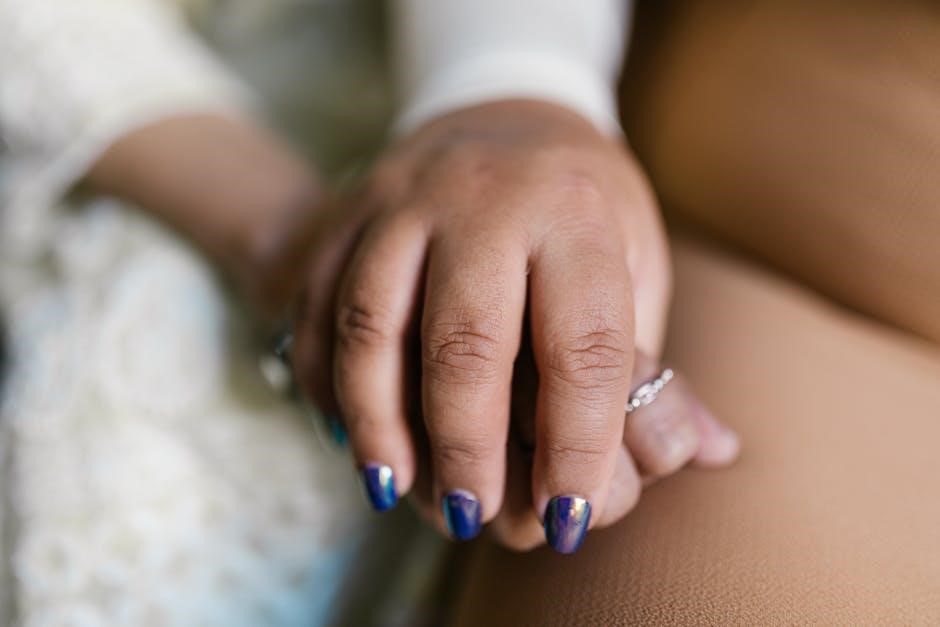
Wide band rings demand careful sizing. Their substantial coverage means they feel noticeably different than slimmer rings. It’s common to need a half to full size larger when choosing a wide band, as they occupy more finger surface area and can feel constricting if sized the same as a thinner ring.
Account for knuckle size. If your knuckle is significantly larger than the base of your finger, a wider band can exacerbate the issue, making it difficult to comfortably pass over the knuckle. Consider a sizing appointment with a jeweler to ensure a perfect, comfortable fit that accommodates both measurements. Prioritize comfort and ease of movement.
Delicate and thin band rings often require a slightly different approach to sizing. Because they take up less space on your finger, they may feel looser than wider bands of the same size. You might consider sizing down a quarter or half size to prevent unwanted spinning or loss.
Consider the ring’s profile. A very thin band can sometimes feel comfortable even if it rotates slightly. However, if you prefer a more secure fit, or if the ring features a prominent stone, a slightly snugger size is recommended. Always prioritize comfort and ensure the ring doesn’t impede circulation.
For the most accurate ring size, visiting a professional jeweler is highly recommended. Jewelers possess specialized tools, like ring mandrels and sizing gauges, to precisely measure your finger. They can account for individual finger variations and provide expert advice tailored to your needs.
A jeweler can also assess the ring style. Different band widths and designs impact the ideal fit. They’ll consider these factors during the sizing process, ensuring a comfortable and secure fit. Don’t hesitate to bring in rings you already own for comparison, or discuss your preferences with the jeweler.
Scheduling an appointment with a reputable jeweler offers a personalized and precise sizing experience. During your visit, the jeweler will use calibrated ring mandrels – tapered metal tools – to determine your accurate size. They’ll gently guide your finger onto the mandrel, noting the point where the fit is snug but comfortable.
Experienced jewelers are skilled at recognizing subtle variations in finger shape. They can account for knuckle size and any swelling, ensuring the ring fits well in all conditions. This professional assessment minimizes the risk of purchasing a ring that requires later resizing, saving you time and expense.
Seeking professional ring sizing offers peace of mind and accuracy that DIY methods often lack. Jewelers possess specialized tools and expertise to account for individual finger variations, like prominent knuckles or uneven swelling. They can accurately measure even if you’re between standard sizes, providing a precise fit.
Furthermore, a jeweler can advise on ring style considerations. Wider bands, for example, typically require a slightly larger size than delicate bands. Professional guidance minimizes the chances of costly resizing and ensures your ring feels comfortable and secure for years to come, making it a truly cherished piece.
Discovering your ring doesn’t fit can be frustrating, but solutions are readily available. Resizing is the most common fix, easily accomplished by a jeweler – either increasing or decreasing the size to achieve a comfortable fit. Consider the ring’s design; intricate settings may limit resizing options.
For a slightly loose ring, temporary fixes exist. Ring guards, small plastic inserts, can reduce the inner diameter. Professional resizing is always recommended for a permanent solution, ensuring the ring’s structural integrity isn’t compromised. Don’t attempt DIY resizing, as it could damage the ring!
Resizing a ring involves adding or removing metal to alter its circumference. Increasing the size (sizing up) is generally easier, as metal can be added through soldering. Sizing down, however, requires removing metal, potentially affecting the ring’s shank and requiring more skilled craftsmanship.
The feasibility of resizing depends on the ring’s construction. Rings with intricate designs, pavé settings, or thin shanks may have limited resizing capabilities. A jeweler will assess the ring and advise on the best course of action, explaining potential costs and limitations. Always prioritize professional resizing to avoid damage!
If your ring is only slightly loose, several temporary fixes can prevent it from slipping off. Ring guards, small plastic or metal inserts, can be placed inside the band to reduce its diameter. These are inexpensive and readily available online or at jewelry stores.
Another option is using ring stoppers, small beads that slide onto the shank to create friction. For a quick fix, a small piece of thread or wax can be temporarily wrapped around the band. However, these are not long-term solutions and should be replaced regularly. Remember, these are temporary measures; professional resizing is the best permanent solution.
Generally, men’s ring sizes tend to be larger than women’s, due to differences in average hand and finger size. The typical ring size for men falls between size 9 and 14, although this varies considerably. Women’s ring sizes commonly range from size 5 to 10.
However, these are just averages, and individual sizes can differ significantly. Factors like hand shape, bone structure, and even climate can influence ring size. It’s crucial to measure the individual’s finger accurately, regardless of gender. Avoid assumptions based solely on gender; precise measurement is always recommended for a comfortable and secure fit.
Most men’s ring sizes fall within the range of size 9 to 14 in US sizing. However, it’s important to remember this is a broad generalization. Many men have ring sizes outside this range, particularly those with larger or smaller hands. Size 10 and 11 are frequently observed as common fits.
For wider band rings, men may require a half or even a full size larger to accommodate the increased bulk. Athletic builds often correlate with larger ring sizes, while those with smaller frames may wear sizes closer to 8 or 9. Accurate measurement is paramount, as relying on averages can lead to an ill-fitting ring. Consider knuckle size too!
The most common ring size for women is generally between size 5 and 7 in US sizing. However, like men, this is simply an average, and individual sizes vary considerably. A size 6 is often considered the most frequently purchased for engagement and wedding rings.
Delicate hands often correlate with sizes 4 to 5, while those with larger hands may require sizes 8 or 9. Factors like hand shape and finger length also play a role. Wider band rings will typically necessitate a larger size for a comfortable fit. It’s crucial to avoid guessing and prioritize accurate measurement to ensure the ring feels secure and comfortable throughout the day.